
I’m really enjoying September in the garden. Granted, we had a serious heat spell early in the month that threatened my fall plants, but with some shade and lots of water, the broccoli, cauliflower, and cabbage survived. I should have taken a picture of it but forgot… but we had a beach umbrella in the broccoli/cauliflower bed to provide some shade in the hottest part of the day. It really seemed to help! But now that it’s cooled off some there are less pests, more established plants, and things are thriving.

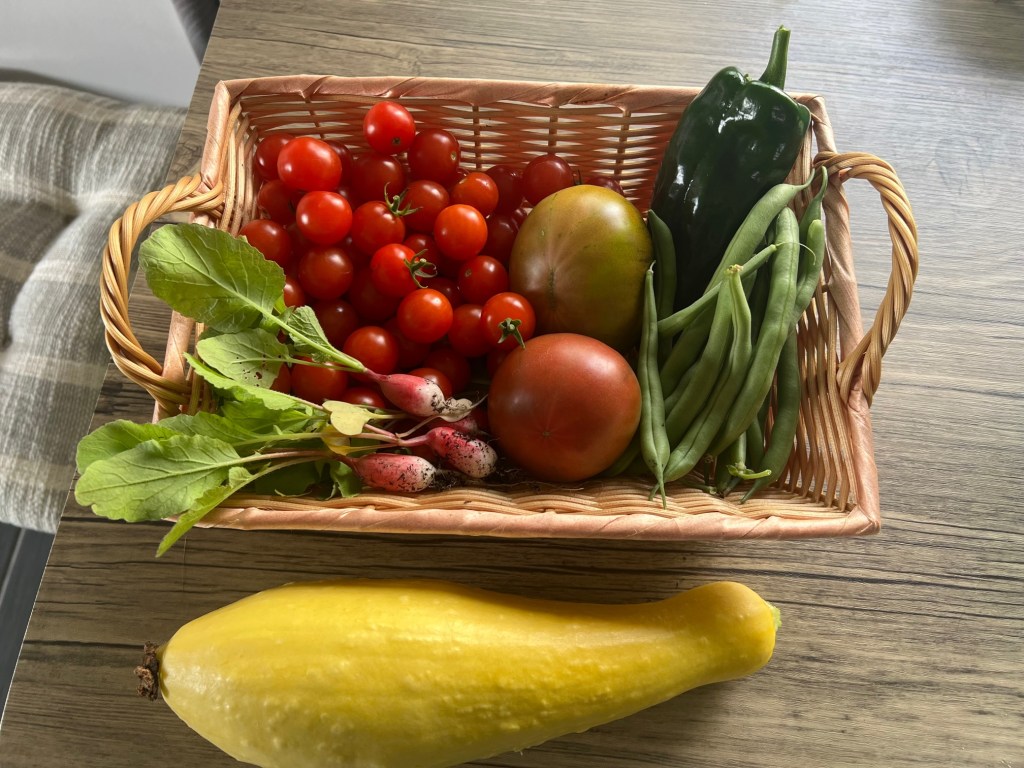
We went away for about 10 days on vacation. It’s hard to not worry that the garden will have been eaten by critters or ravaged by disease while you’re gone, but thankfully, everything pulled through (shout-out to my brother and my bestie for coming over to water and help out while we were gone!). We’re getting lovely harvests from the tomatoes, mustard greens, radishes, yellow squash, cucumbers, watermelons, and really all the herbs. The green beans and peppers are slow growers for us at the moment, but we’ve still been able to pick some.
But, there is disease. The two worst ones right now are septoria leaf spot on the tomatoes, and powdery mildew on the various squash plants. The septoria leaf spot turns the lower leaves yellowish and gives them brown spots. As far as I’ve learned, there’s not much you can do once it shows up, other than pruning affected leaves and then rotating the plants to a different bed the following year (it’s caused by a fungus that can over-winter). The plants are strong enough at this point to still be producing tomatoes, but it’s no fun to see your babies all spotted up!

The powdery mildew is also caused by a type of fungus, and makes the plants look like they have little spots of flour or white dust all over them. There are various home remedies suggested depending on what you read, but I’ve had a great deal of success with putting a teaspoon of baking soda and a tiny drop of dish-soap into my little spray bottle, filling with water, and shaking it up. I prune off the worst leaves, and then spray the tops and bottoms of the other leaves. The picture below barely even looks like powdery mildew anymore because I treated the plants with this mixture the previous day (and naturally forgot to take a ‘before’ photo). Just be careful – if you add too much dish-soap, it will burn the leaves. I made that mistake once.

I can’t wait to see what the next few weeks bring. With any luck, I’ll be harvesting some broccoli, cauliflower, bok choy, and butternut squash soon! Thanks for reading 🙂
 Mark & Beth's Homegrown Adventure